
Are you looking to break into the real estate investment market but concerned about qualifying for traditional financing? DSCR loans might be the solution you’re searching for. Unlike conventional mortgages that scrutinize your personal income, these specialized investment property loans focus primarily on the rental income your property can generate. Let’s dive into everything you need to know about DSCR loans and how they can kickstart your real estate investment journey.
What Is a DSCR Loan?
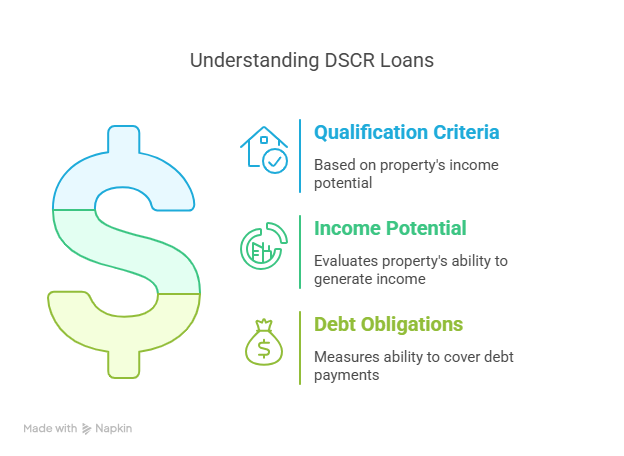
A DSCR loan, or Debt Service Coverage Ratio loan, is a financing option specifically designed for real estate investors. The key difference between DSCR loans and conventional mortgages is that qualification is based on the property’s income potential rather than your personal income or employment history.
The Debt Service Coverage Ratio itself is a calculation that measures whether a property generates sufficient income to cover its debt obligations. The formula is straightforward:
DSCR = Monthly Rental Income ÷ Monthly PITIAWhere PITIA represents the total of Principal, Interest, Taxes, Insurance, and Association dues.
A DSCR of 1.0 means the property’s income exactly covers its expenses. Anything above 1.0 indicates positive cash flow, while anything below means the property operates at a loss. Most lenders prefer to see a DSCR of at least 1.0, with many requiring 1.25 or higher for the most favorable terms you can get.
Why First-Time Investors Should Consider DSCR Loans
If you’re just starting your real estate investment journey, DSCR loans offer several advantages:
- No income verification required: You don’t need to provide tax returns, W-2s, or pay stubs
- Faster approval process: Fewer documentation requirements mean quicker closings
- No limit on financed properties: Unlike conventional loans that cap the number of mortgaged properties
- Business entity options: You can borrow through an LLC rather than personally
- Ideal for self-employed investors: Your personal income fluctuations won’t affect qualification
These benefits make DSCR loans particularly attractive if you have complex income situations or want to scale your portfolio quickly.
DSCR Loan Requirements You Need to Know
While DSCR loans don’t focus on your personal income, they do have specific requirements:

Credit Score
Most lenders require a minimum credit score between 620 and 680. Higher scores typically result in better interest rates and loan terms. Some specialty lenders may consider scores as low as 550, but expect stricter terms and higher rates.
Down Payment
Be prepared to make a larger down payment than with conventional financing. Most DSCR loans require 20-25{b92bc4f90207b85c6e672c12389678840946188ba238ac1c1570ae4bcd8b3d52} down, with a maximum loan-to-value (LTV) ratio of 75-80{b92bc4f90207b85c6e672c12389678840946188ba238ac1c1570ae4bcd8b3d52}. Lower DSCR ratios or credit scores may necessitate even larger down payments.
Property Types
DSCR loans are strictly for investment properties—never primary residences. Most commonly, they’re used for:
- Single-family rental homes
- 2-4 unit residential properties
- Small apartment buildings (in some cases)
- Short-term vacation rentals
The property must be able to generate rental income and will undergo an appraisal to verify both its value and income potential.
Loan Amount
These loans typically start at $100,000-$175,000, with maximums often reaching $2-3 million depending on the lender. Don’t forget, Jumbo DSCR options may be available for higher-value properties.
Cash Reserves
Many lenders require borrowers to demonstrate cash reserves—typically 3-12 months of mortgage payments. This requirement may increase if your DSCR is below 1.0 or if you have a lower credit score.
How to Apply for a DSCR Loan: A Step-by-Step Process
- Research DSCR lenders: Unlike conventional loans, not all lenders offer DSCR programs. Look for mortgage brokers and lenders specializing in investment property financing.
- Calculate your property’s DSCR: Before applying, run the numbers to ensure your property meets minimum DSCR requirements. Use current or projected rental income divided by all property expenses.
- Gather documentation: While less intensive than conventional loans, you’ll still need:
- Proof of rental income or market rent analysis
- Property details and purchase contract
- Personal identification and credit information
- Bank statements showing available funds for down payment and reserves
- Submit your application: Most lenders offer online applications with support from loan officers specializing in investment property financing.
- Property appraisal: The lender will order an appraisal to verify the property’s value and rental income potential.
- Close on your loan: DSCR loans often close faster than conventional financing—sometimes in as little as 2-3 weeks.
Common Pitfalls to Avoid with DSCR Loans
First-time investors should be aware of potential drawbacks:
- Higher interest rates: Expect to pay 0.5-2{b92bc4f90207b85c6e672c12389678840946188ba238ac1c1570ae4bcd8b3d52} higher rates than conventional loans
- Larger down payments: The 20-25{b92bc4f90207b85c6e672c12389678840946188ba238ac1c1570ae4bcd8b3d52} minimum can be challenging for new investors
- Prepayment penalties: Many DSCR loans include penalties for early payoff
- Vacancy risk: If your property sits empty, you’re still responsible for payments
Is a DSCR Loan Right for Your First Investment?
DSCR loans work best for investors who:
- Have good credit but complex income situations
- Want to scale their portfolio beyond conventional loan limits
- Value speed and simplicity in the loan process
- Have sufficient cash for larger down payments
- Understand rental market dynamics and cash flow analysis
If you’re primarily focused on rock-bottom interest rates and have W-2 income that easily qualifies you for conventional financing, you might explore traditional options first. However, for many aspiring real estate investors, DSCR loans offer the perfect balance of accessibility and scalability.
Ready for Your Next Move?
DSCR loans have revolutionized real estate investing by creating pathways for investors who might not qualify through traditional means. By focusing on property performance rather than personal income, these loans align perfectly with the investment mindset—evaluating assets based on their ability to generate returns.
For first-time investors, DSCR loans can be the key that unlocks your real estate portfolio’s growth. Take time to understand the requirements, run accurate cash flow projections, and partner with lenders experienced in investment property financing.
Ready to take the next step? Research DSCR loan providers in your area and start analyzing potential investment properties with their DSCR requirements in mind. Your journey to building wealth through real estate investing starts here.